
Have you ever been asked a loaded question that left you fumbling for the right way to answer? That’s how I feel every time someone innocently asks me, “Why don’t you just do IVF?”
I get it. It seems like an obvious solution. And I understand full well why couples do choose to go down the route of IVF (in-vitro fertilization): for the outcome of a beautiful baby that is deeply wanted, even prayed for. That is a natural, good, and admirable desire.
It was only in these last few years in our own personal battle with infertility that Dan and I have been in a place to consider our options. In doing so, we have stumbled upon the facts behind this artificial reproductive technology, facts often swept under the rug. In our own research, we have learned a lot about what the process of IVF offers and what it doesn’t.
I know this topic is sensitive and much of what I write will be unpopular and even countercultural. I choose to write this with a few caveats to acknowledge others’ experiences.
First off, if you or someone very close to you utilized IVF in the pursuit of growing your family, I do not shame you. That is not my intention and it is not my place. The desire to be a mother is strong and women who experience infertility are even stronger as they become warriors in a battle, a battle we were never designed to fight. God never wished infertility on us.
Secondly, I acknowledge that someone may be reading this who did indeed conceive a child through IVF. I know that you must love that child more than anything. Nothing in my writing negates the value of your child, your marriage, or your motherhood. Your child is a gift, absolutely unrepeatable; so are you and your husband.
Thirdly, I also recognize that someone may read this who was conceived through IVF. Know this: You are a beloved child of God with inherent dignity and infinite worth in the eyes of your Creator and in no way, shape, or form does IVF change that.
Lastly, I realize that many people may think me a fool for not using modern science to grow our family and put us out of the misery of infertility. In the eyes of the world, I get that too. But read on to understand my heart.
“Why don’t you just do IVF?”
For as many times as this question has been asked in almost 6 years of infertility, I rarely give the answer its true justice. My hope in writing this is to share the truth with sensitive charity of the three reasons why Dan and I have never considered IVF.
1. We wanted answers.
When you go to the doctor with symptoms of a sore throat and a runny nose, you expect to come out with a diagnosis and maybe even a prescription. You expect that the doctor is the medical expert whose goal is to heal and restore your body to good health.
Did you know that infertility is also the symptom of an underlying disease? Unfortunately, much of the medical world does not view infertility as a symptom to be investigated and this is the first problem with IVF.
At even the hint of a couple having difficulty conceiving, many mainstream OB/GYNs refer couples straight to IVF clinics. These clinics, staffed with reproductive endocrinologists who call themselves ‘fertility specialists’, also fail to get to the root of the problem. The goal is quite simple and the sticker price is quite high: to get you a baby – at almost any cost. I don’t know about you, but that doesn’t sit right with me.
It was really only a stroke of luck that led Dan and me to a restorative health approach, aimed at diagnosing and treating the underlying issues of our infertility. Instead of bypassing the body, restorative health providers dig deep with a fine tooth comb to uncover the root causes and address them in a holistic way that honors the dignity of both the body and the person.
Natural Procreative Technology (NaPRO), the leader in this restorative approach, is more than simply an alternative to IVF and other artificial reproductive technologies. NaPRO is the best kept secret of women’s reproductive healthcare right now. But it doesn’t have to stay a secret! If more women knew about the evidence-based benefits of NaPRO, I am convinced more couples would be helped in conceiving naturally.
I credit the real science of NaPRO, coupled with the Creighton Model fertility charting system, to the discovery of my diagnoses of hypothyroidism, MTHFR genetic mutation, endometriosis, and hormone imbalances. But it didn’t just stop there! My NaPRO doctor guided me in a treatment plan to manage and correct these underlying health issues to ultimately restore my general health and hopefully improve my fertility.
Although NaPRO has not led to the outcome of a successful pregnancy for Dan and me, I’ve come to realize we are a rare case! I know for a fact that it has helped so many couples grow their families. I heard a recent statistic that NaPRO can increase a couple’s chances of naturally conceiving by up to 80% within the first year.1
IVF, on the contrary, is successful at a max 50% of the time per egg retrieval,2 and this is often after tens of thousands of dollars have already been spent by the couple after many failed IVF attempts. Not to mention the many bodily complications including the heavy toll taken on many women with ovarian hyper-stimulation syndrome, an exaggerated response to excess hormone production prescribed by IVF providers.
It’s possible that IVF may solve the problem of childlessness and grow beautiful families, but it simply doesn’t address the underlying health issues that lead to infertility in the first place.
Women, you and your husbands deserve better!
See my new page in the Resources tab for a link to learn more about the authentic science of NaPRO and find NaPRO providers.
2. We are pro-life.
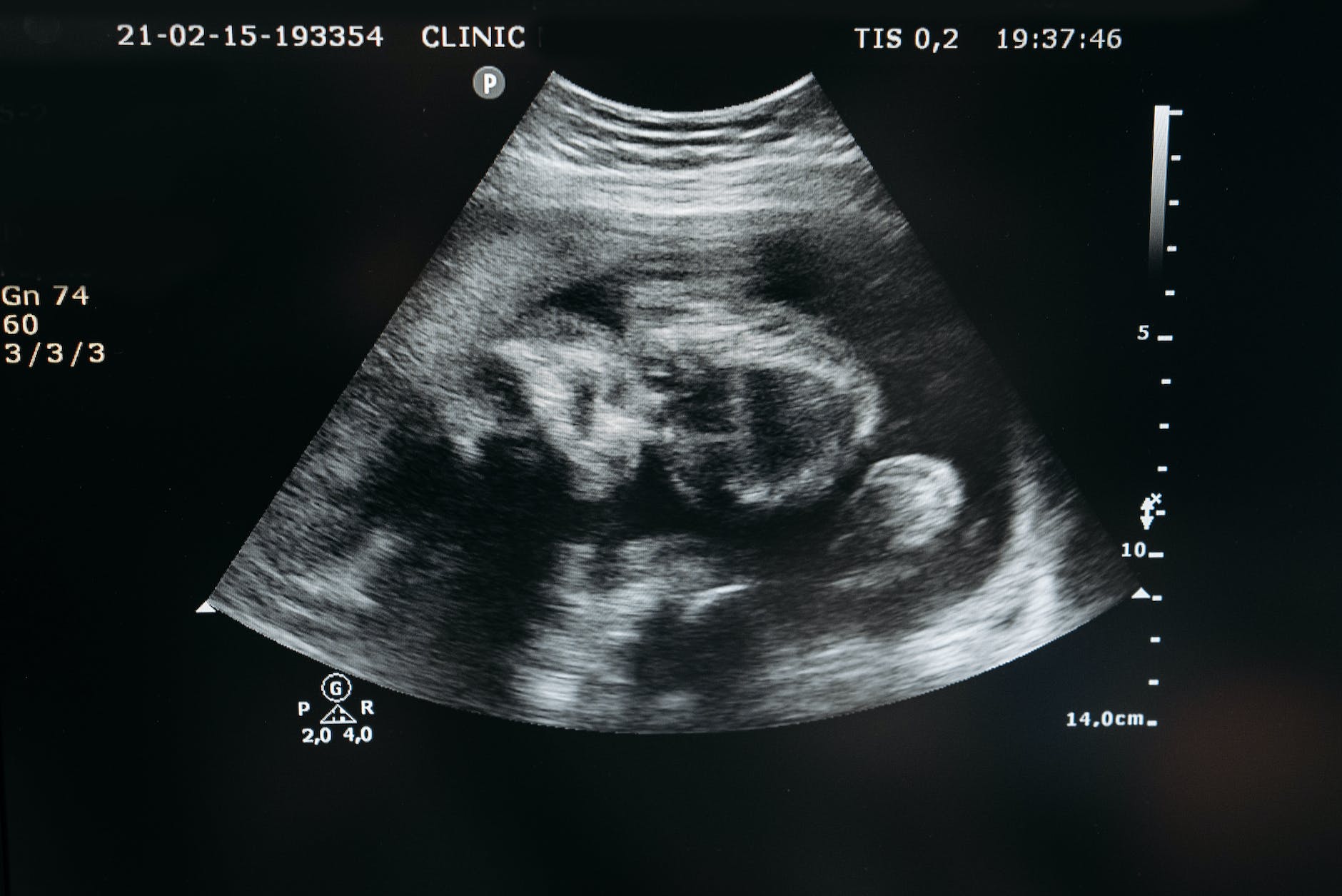
Dan and I respect that human life begins at conception, the moment of fertilization. In a recent large survey, a whopping 96% of biologists agreed to this fact.3 We also believe that every person, whether medically termed an embryo or a fetus, born or unborn, young or old, abled or disabled, is a beloved child of God with infinite dignity and worth.
That leads to the second problem of IVF: It’s a highly abortive technology.
Did you know that in one cycle of IVF, multiple embryos are created but many of them are discarded prior to implantation or frozen for later use in an attempt to achieve a healthy pregnancy of just one, maybe two of the ‘best graded’ embryos?
Have you heard of selective reduction, a process of eliminating fetuses after implantation, for the purpose of reducing the risk of miscarriage, children born with disabilities, and other complications that come with carrying multiples? Many couples are led to make this gut-wrenching decision in order to increase the chances of having at least one healthy baby survive. If it looks like an abortion and sounds like an abortion, it is an abortion.
Ironically, the very process intended to bring children into the world causes far more of them to die! Furthermore, the process of IVF causes pre-born babies to be viewed as objects for use or disposal rather than as human persons with infinite value.
It’s true that on our wedding day Dan and I vowed to be open to life. But that openness doesn’t give us free rein to do whatever we want to control our outcomes. Openness requires a trustful surrender and an attitude of receptivity – both to God and to each other.
I once heard it said that “couples who don’t do everything in their power to conceive are witnesses to the gift of the child.” As hard as it is some days not to want to do everything in our power to conceive, it’s far better for us to view all life as gift and God the ultimate Giver of that gift in His time and in His ways.
3. We love each other.
I married Dan because I love him, not because he could be the means through which I could have children. Children are a beautiful gift which we have prayed for, but believe it or not, my love for Dan is stronger than my desire to have children.
“…I will love you and honor you all the days of my life.”
St. Thomas Aquinas said it right: “To love is to will the good of the other.” If loving and honoring Dan means that I will his good, then my vocation as a wife requires that I respect his pursuit of virtue and growth in the moral life.
This leads to the third problem with IVF. This may be hard for some people to read, but the truth is that the very process of IVF requires immoral means to create a baby in that procreation is intentionally separated from the marital act, thereby disrupting the one-flesh union.
If Dan and I were to pursue IVF, our participation would cause us to stray from the very act of giving ourselves to one another freely, totally, faithfully, and fruitfully4 in the intimacy of our marriage. The very process intended to grow our family would tempt us to turn away from God and from each other. I love my husband and I respect our marriage too much to allow anything to sever the sacred bond between us.
I remember in my single life when I never imagined I could meet a man as good as Dan and when my expectations for my future husband were really very low. That all changed when God placed Dan in my life and granted me a grace of peace I had never previously known.
In my prayers for a ‘miracle baby’ and in the long waiting that is infertility, my heart has been stretched and God has revealed his blessings in unexpected ways. Some days, I look at Dan and I am convinced that he is the miracle. He is the gift God graciously gave me. The gift of Dan – God renews for me each day.
And our marriage – it’s a gift too. A gift freely given by God. And when lived out in the fullness of the sacrament, without grasping for things out of our finite reach, that’s when our marriage is a love story. A love story I wouldn’t trade for anything. A love story that leads to miracle after miracle, if only we believe.

References
1. http://www.popepaulvi.com/PDF/NaPro-vs-ART.pdf
2. https://www.sartcorsonline.com/rptCSR_PublicMultYear.aspx
4.https://d2y1pz2y630308.cloudfront.net/2232/documents/2016/9/theology_of_the_body.pdf


 Fruitful Fiat
Leave a comment